



The Success
Malaria control has been one of global health’s greatest achievements. In 2024:
● Saved one million lives
● Prevented 170 million cases
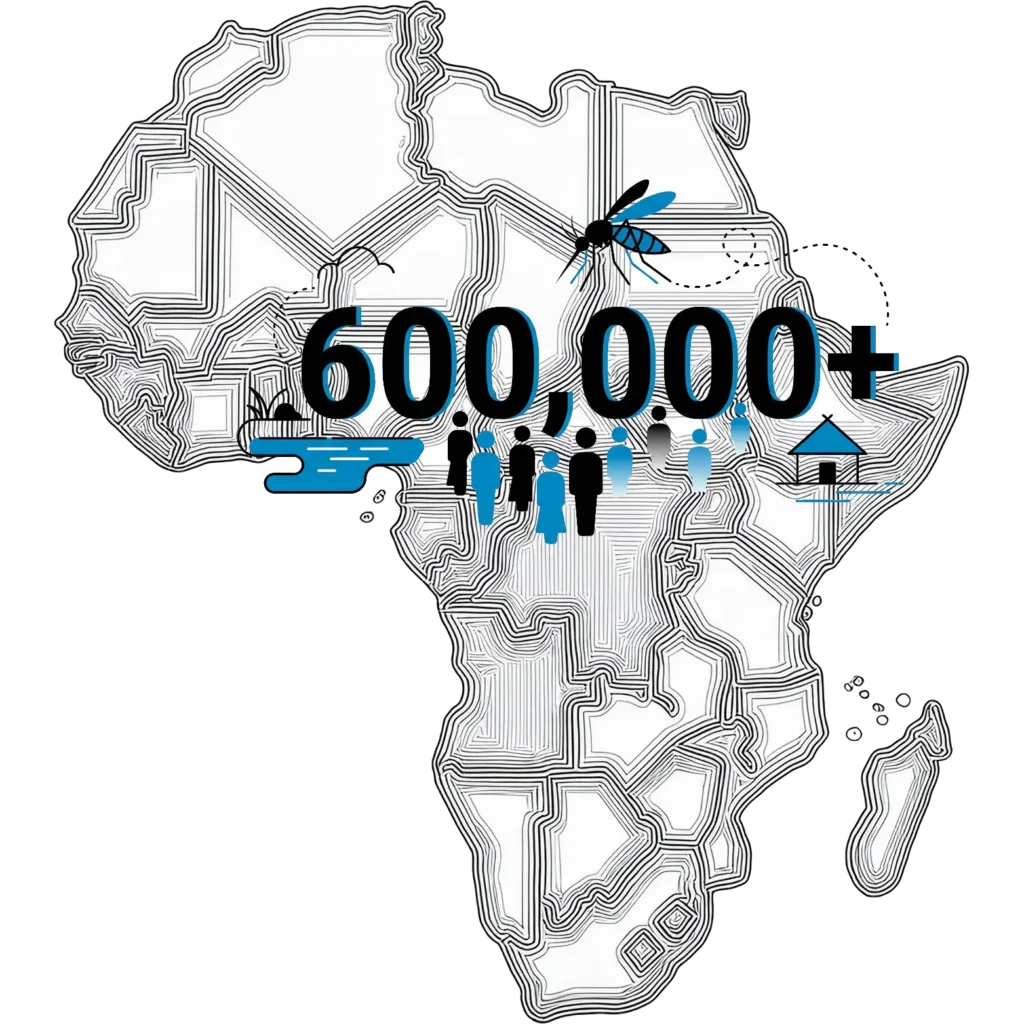
● 600,000+ lives lost to
malaria annually
Source: WHO
● 282 million malaria cases
Source: WHO
● 95% of malaria deaths occur in Africa
Source: WHO
● 50% of the world’s population
is at risk of dengue
Source: WHO

● New populations at risk
● Climate change and urbanization expanding vector habitats
● Changing mosquito behavior reducing indoor-only interventions
● Spread of invasive vector species
Malaria control has been one of global health’s greatest achievements. In 2024:
● Saved one million lives
● Prevented 170 million cases
● 600,000+ lives lost to malaria annually
Source: WHO
● 282 million malaria cases
Source: WHO
● 95% of malaria deaths occur in Africa
Source: WHO
● 50% of the world’s population is at risk of dengue
Source: WHO
● New populations at risk
● Climate change and urbanization expanding vector habitats
● Changing mosquito behavior reducing indoor-only interventions
● Spread of invasive vector species
“Our working hours have decreased significantly.” -Ghana field team
Targeting Aedes mosquitos that spread Dengue.
Working with cities.
“Our working hours have decreased significantly.” -Ghana field team
Targeting Aedes mosquitos that spread Dengue.
Working with cities.
Strengthen surveillance systems with real-time data.
Measureable impact for grant-funded programs.
Precision agriculture and environmental, social, and governance reporting.
“Our working hours and travel distances have decreased, significantly reducing the burden of workers.”
– Ghana Intervention Zone Spray Team

“Our working hours and travel distances have decreased, significantly reducing the burden of workers.”
– Ghana Intervention Zone Spray Team
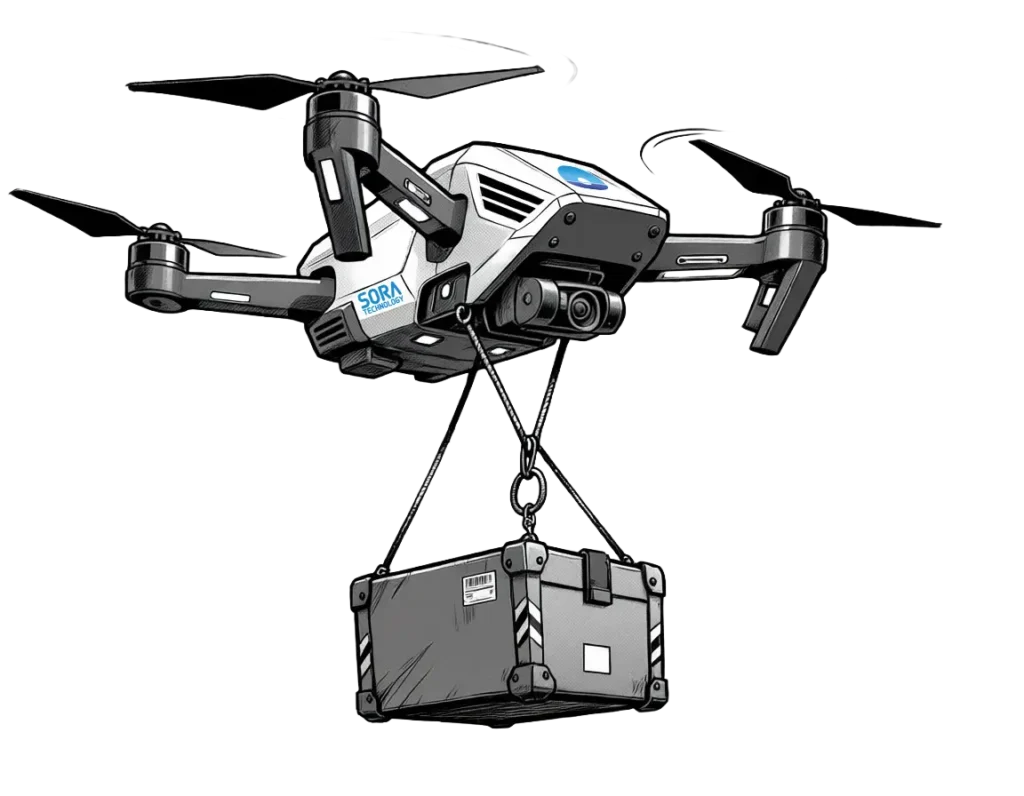
● Emergency small-lot deliveries of urgent, temperature-controlled commodities
● Safe, reliable, on-demand transportation using drone air delivery
● Targeted climate adaption solutions for small holder farmers
● Quantifies soil moisture, vegetation, topography for optimization
● Addresses soil degradation empowering sustainable farming
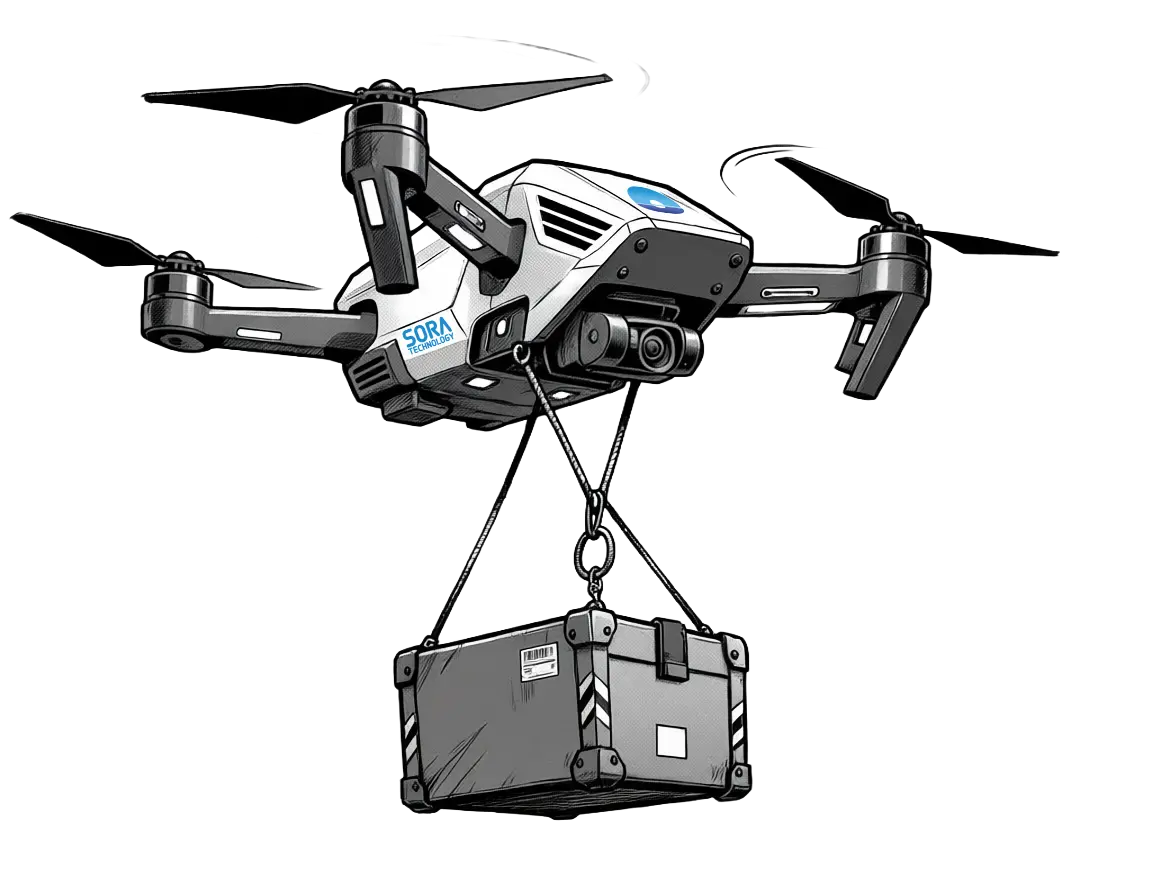
● Emergency small-lot deliveries of urgent, temperature-controlled commodities
● Safe, reliable, on-demand transportation using drone air delivery
● Targeted climate adaption solutions for small holder farmers
● Quantifies soil moisture, vegetation, topography for optimization
● Addresses soil degradation empowering sustainable farming
Malaria remains one of the leading causes of illness and death in sub-Saharan Africa. In Ghana, larval source management (LSM) — the targeted treatment of mosquito breeding sites with larvicide — is recognised as a complementary vector control strategy, but its wider adoption has been constrained by the high cost and labour intensity of conventional manual mapping and treatment.
In 2024, SORA Technology conducted a comparative field trial across eight sub-districts in Ghana’s Kwaebibirem District, in partnership with the University of Ghana Business School, the Noguchi Memorial Institute for Medical Research, and Ghana’s National Malaria Elimination Program. Four sub-districts received SORA’s drone and AI-assisted approach; four continued with standard manual LSM as controls.
Drones mapped each area one to two days before larvicide application, generating high-resolution imagery of potential breeding sites. An AI model then classified each water body by larval risk, directing field teams via mobile devices to treat only high-risk sites. The results were significant: drone mapping identified 3.61 times more breeding sites than manual scouting, labour requirements were cut by approximately half, and larvicide efficiency improved nearly threefold — all without compromising malaria case trends relative to the control group.
The findings, published in PLOS ONE in February 2026, provide the first peer-reviewed evidence that integrating drone mapping and AI risk classification into LSM operations can substantially reduce resource inputs without undermining vector control effectiveness.
Dengue is one of the fastest-spreading mosquito-borne diseases globally, with hundreds of millions of infections reported annually. The Asia-Pacific region carries a disproportionate share of this burden. As with malaria, effective prevention depends on identifying and treating mosquito breeding sites before outbreaks occur — a task that conventional ground-based methods struggle to deliver at scale.
In July 2025, SORA Technology conducted a two-day field demonstration on Leyte Island, the Philippines, applying its drone and AI-based vector control approach — developed through malaria control operations in Africa — to dengue prevention for the first time. The project was implemented in partnership with Help.NGO, a UN-registered international humanitarian organisation with extensive experience in disaster response and technology-enabled field operations.
Drones conducted aerial surveys to map potential breeding water bodies across the target area. AI models then analysed environmental indicators to identify sites at highest risk of supporting Aedes mosquito populations, the primary vectors of dengue. The demonstration was designed to test whether SORA’s approach could be effectively adapted from the malaria context in Africa to the dengue context in Southeast Asia.
The collaboration with Help.NGO reflects a deliberate strategy of pairing technical innovation with established humanitarian networks and local field expertise. SORA intends to build on this demonstration toward broader deployment across the Philippines and other countries in the region where dengue, chikungunya, and other neglected tropical diseases pose growing public health threats — risks that climate change is expected to intensify.
Climate change is intensifying flood risk across African cities, with severe consequences for public health. In informal settlements with poor drainage infrastructure, heavy rainfall creates pools of stagnant water that drive outbreaks of waterborne diseases including typhoid and cholera. Conventional public health responses are reactive — triggered after disasters occur rather than in advance of them.
Between September 2024 and March 2025, SORA Technology completed a proof of concept in Nairobi, Kenya, deploying an AI and satellite-based flood management system to test whether disease outbreak risk could be predicted and acted on before it materialised. The project was conducted under the Tokyo Metropolitan Government’s King Salmon Program, which supports innovative startups expanding into global cities, and received additional backing from Japan’s Ministry of Economy, Trade and Industry.
The system generated predictions across eight indicators, covering flood hotspot locations, estimated affected populations by sub-county, impacts on roads and hospitals, and projected patient numbers and medicine demand for diarrheal diseases and typhoid. When validated against actual flooding events in Nairobi in April 2024, the flood hotspot prediction model achieved an accuracy rate of 69%, with overall damage trends aligning closely with observed outcomes.
The key operational advance was timing. Where information had previously only been available after a disaster, the system demonstrated the ability to generate risk assessments approximately one week in advance — providing local governments and healthcare providers with lead time to pre-position supplies and plan responses.
SORA Technology is exploring expansion of the platform to additional cities in Kenya and other countries in Africa, building on its existing operations in Ghana, Kenya, and Mozambique.
Government agencies face growing pressure to deliver effective malaria control within constrained budgets. Field data from Ghana shows what SORA’s drone and AI-assisted approach delivers in practice: a 60% reduction in larvicide use, 50–70% lower labour costs, and up to 468% more breeding sites identified than conventional manual methods. The approach also generates digital data that strengthens early warning systems and supports administrative decision-making — giving donors and national malaria programmes a more defensible return on investment and a clearer pathway toward scalable elimination.
Residents of African and Asian countries with a high risk of malaria infection. Currently, 200 million people are infected with malaria each year, resulting in 600,000 deaths, 95% of which occur in Africa. The widespread adoption of SORA Technology’s solutions can accelerate improvements in sanitary conditions and saving lives.
Companies and industries operating in malaria-endemic regions bear a significant share of the disease’s economic burden through lost productivity, absenteeism, and workforce health costs. By adopting SORA Technology’s drone and AI-assisted LSM, local spraying contractors can achieve more targeted larval control while reducing labour costs and minimising environmental impact. For industries with large workforces in high-risk areas — including extractives and mining — SORA’s solutions offer a scalable approach to protecting workers and reducing the operational costs associated with malaria in the field.
Malaria remains one of the leading causes of illness and death in sub-Saharan Africa. In Ghana, larval source management (LSM) — the targeted treatment of mosquito breeding sites with larvicide — is recognised as a complementary vector control strategy, but its wider adoption has been constrained by the high cost and labour intensity of conventional manual mapping and treatment.
In 2024, SORA Technology conducted a comparative field trial across eight sub-districts in Ghana’s Kwaebibirem District, in partnership with the University of Ghana Business School, the Noguchi Memorial Institute for Medical Research, and Ghana’s National Malaria Elimination Program. Four sub-districts received SORA’s drone and AI-assisted approach; four continued with standard manual LSM as controls.
Drones mapped each area one to two days before larvicide application, generating high-resolution imagery of potential breeding sites. An AI model then classified each water body by larval risk, directing field teams via mobile devices to treat only high-risk sites. The results were significant: drone mapping identified 3.61 times more breeding sites than manual scouting, labour requirements were cut by approximately half, and larvicide efficiency improved nearly threefold — all without compromising malaria case trends relative to the control group.
The findings, published in PLOS ONE in February 2026, provide the first peer-reviewed evidence that integrating drone mapping and AI risk classification into LSM operations can substantially reduce resource inputs without undermining vector control effectiveness.
Dengue is one of the fastest-spreading mosquito-borne diseases globally, with hundreds of millions of infections reported annually. The Asia-Pacific region carries a disproportionate share of this burden. As with malaria, effective prevention depends on identifying and treating mosquito breeding sites before outbreaks occur — a task that conventional ground-based methods struggle to deliver at scale.
In July 2025, SORA Technology conducted a two-day field demonstration on Leyte Island, the Philippines, applying its drone and AI-based vector control approach — developed through malaria control operations in Africa — to dengue prevention for the first time. The project was implemented in partnership with Help.NGO, a UN-registered international humanitarian organisation with extensive experience in disaster response and technology-enabled field operations.
Drones conducted aerial surveys to map potential breeding water bodies across the target area. AI models then analysed environmental indicators to identify sites at highest risk of supporting Aedes mosquito populations, the primary vectors of dengue. The demonstration was designed to test whether SORA’s approach could be effectively adapted from the malaria context in Africa to the dengue context in Southeast Asia.
The collaboration with Help.NGO reflects a deliberate strategy of pairing technical innovation with established humanitarian networks and local field expertise. SORA intends to build on this demonstration toward broader deployment across the Philippines and other countries in the region where dengue, chikungunya, and other neglected tropical diseases pose growing public health threats — risks that climate change is expected to intensify.
Dengue is one of the fastest-spreading mosquito-borne diseases globally, with hundreds of millions of infections reported annually. The Asia-Pacific region carries a disproportionate share of this burden. As with malaria, effective prevention depends on identifying and treating mosquito breeding sites before outbreaks occur — a task that conventional ground-based methods struggle to deliver at scale.
In July 2025, SORA Technology conducted a two-day field demonstration on Leyte Island, the Philippines, applying its drone and AI-based vector control approach — developed through malaria control operations in Africa — to dengue prevention for the first time. The project was implemented in partnership with Help.NGO, a UN-registered international humanitarian organisation with extensive experience in disaster response and technology-enabled field operations.
Drones conducted aerial surveys to map potential breeding water bodies across the target area. AI models then analysed environmental indicators to identify sites at highest risk of supporting Aedes mosquito populations, the primary vectors of dengue. The demonstration was designed to test whether SORA’s approach could be effectively adapted from the malaria context in Africa to the dengue context in Southeast Asia.
The collaboration with Help.NGO reflects a deliberate strategy of pairing technical innovation with established humanitarian networks and local field expertise. SORA intends to build on this demonstration toward broader deployment across the Philippines and other countries in the region where dengue, chikungunya, and other neglected tropical diseases pose growing public health threats — risks that climate change is expected to intensify.
Climate change is intensifying flood risk across African cities, with severe consequences for public health. In informal settlements with poor drainage infrastructure, heavy rainfall creates pools of stagnant water that drive outbreaks of waterborne diseases including typhoid and cholera. Conventional public health responses are reactive — triggered after disasters occur rather than in advance of them.
Between September 2024 and March 2025, SORA Technology completed a proof of concept in Nairobi, Kenya, deploying an AI and satellite-based flood management system to test whether disease outbreak risk could be predicted and acted on before it materialised. The project was conducted under the Tokyo Metropolitan Government’s King Salmon Program, which supports innovative startups expanding into global cities, and received additional backing from Japan’s Ministry of Economy, Trade and Industry.
The system generated predictions across eight indicators, covering flood hotspot locations, estimated affected populations by sub-county, impacts on roads and hospitals, and projected patient numbers and medicine demand for diarrheal diseases and typhoid. When validated against actual flooding events in Nairobi in April 2024, the flood hotspot prediction model achieved an accuracy rate of 69%, with overall damage trends aligning closely with observed outcomes.
The key operational advance was timing. Where information had previously only been available after a disaster, the system demonstrated the ability to generate risk assessments approximately one week in advance — providing local governments and healthcare providers with lead time to pre-position supplies and plan responses.
SORA Technology is exploring expansion of the platform to additional cities in Kenya and other countries in Africa, building on its existing operations in Ghana, Kenya, and Mozambique.